
Stories
REAL EVENTS, REAL PEOPLE, REAL PLACES
Narrative stories inspired by the Banbury Dockyard, the Oxford Canal and the working lives of the people who shaped its history.

Featured Stories

Dockyard Life:
1778 – The Arrival of the First Coal Boats
The day the Oxford Canal reached Banbury. Crowds gathered to witness the arrival of the first coal boats and the beginning of a new working relationship between the town, the canal and the dockyard.

People & Places:
Thomas Cotton and the Loss of the Dock
A story of uncertainty and change at the Banbury Dockyard in 1830, as the bankruptcy of boatbuilder Thomas Cotton brought disruption to one of the canal yard’s earliest operators.

Historical Events:
The Fire at Neal’s Dockyard
A serious fire breaks out at the Banbury Dockyard in 1897, threatening workshops, nearby buildings and the working life of the canal yard during the middle of the night.
Trade & Craft:
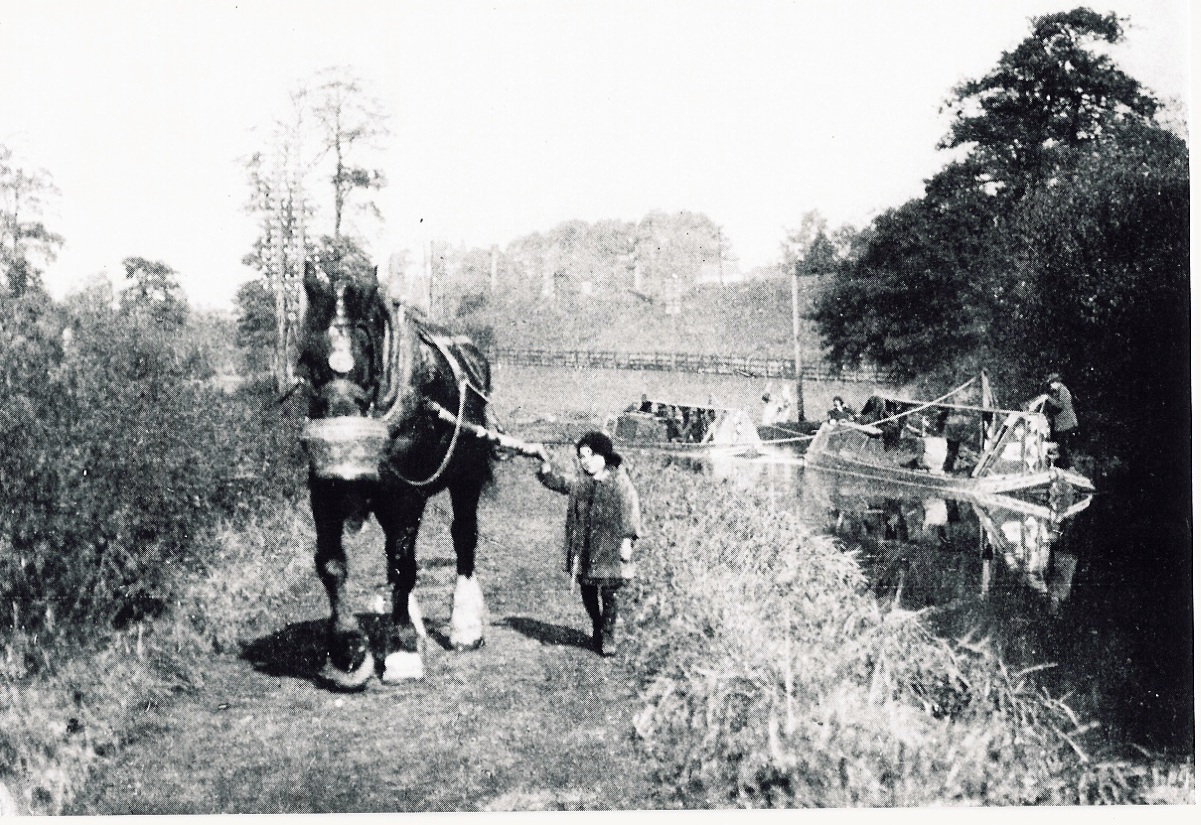
Once Shod, Never Forgot
Joe and Rose Skinner arrive at Tooley’s with their mule Dolly after losing a shoe on the Oxford Canal, offering a glimpse into the final years of horse-drawn carrying and canal blacksmithing traditions.

People & Places:
Rolt and Cressy at Tooley’s
Tom Rolt arrives at the Banbury Dockyard in the late 1930s and encounters a working boatyard where boatbuilding, painting, blacksmithing and repair still survived together as a complete craft tradition.

Wartime Stories:
Still, the Work Went On
During the Second World War, bombing at Banbury Lock disrupts the canal, yet work at the dockyard continues. A story of resilience, repair and continuity during wartime.
This story has been accepted for publication in Stand magazine and will appear in a forthcoming issue.
This story has been accepted for publication in Stand magazine and will appear in a forthcoming issue.
About the Stories
These stories are based on real events connected with the Banbury Dockyard and the Oxford Canal.
Many draw directly from newspaper reports, archive material and documented incidents uncovered during research.
Others are shaped from oral history, working traditions and the everyday realities of life on the waterways.
Together they offer glimpses into the people, places and moments that shaped one of Britain’s oldest working boatyards.

This story is based on contemporary newspaper reports describing the arrival of the first coal boats into Banbury on 30 March 1778, following the opening of the Oxford Canal to the town. An account published in the Oxford Journal records how the boats arrived “amidst the loudest acclamations” of large crowds gathered along the canal and wharf to witness the event.
The arrival of the canal transformed Banbury. Coal, previously expensive and difficult to transport by road, could now be delivered directly into the town in far greater quantities. The story explores this moment not simply as the arrival of boats, but as the beginning of a new industrial and commercial relationship between Banbury, the canal and the dockyard itself.
This story is based on newspaper notices and bankruptcy reports relating to Thomas Cotton, one of the earliest known operators of the Banbury Dockyard. In 1830, notices published in the Oxford Journal recorded the bankruptcy proceedings against Cotton and the subsequent sale of boats, timber, tools and equipment from the dockyard.
The surviving reports provide a rare glimpse into the realities of an early canal-side boatyard and the uncertainty faced by those who worked within it. The story explores the collapse of a working business at the waterside and the dispersal of the materials, equipment and labour connected to it
This story is based on reports published in the Banbury Guardian describing a major fire at Neal’s Dockyard in November 1897. The fire spread rapidly through workshops containing timber, tar, paint and other combustible boatbuilding materials, threatening nearby buildings and Castle Wharf itself.
The reports also describe the difficulties faced by the local fire brigade, including problems with hydrants and equipment, alongside the efforts of those already present at the yard to contain the flames. The incident offers a vivid insight into the dangers and conditions associated with a working nineteenth century canal dockyard.
This story is based on later recorded accounts and oral traditions associated with horse boating families on the Oxford Canal, particularly Joe and Rose Skinner, often remembered as among the last traditional horse boat operators. Their journeys regularly brought them through Banbury and to the forge at Tooley’s Boatyard.
Central to the story is Dolly the mule and the role of the dockyard blacksmith in maintaining the working life of the canal. Rather than focusing on a single documented incident, the story draws together recorded canal practice, remembered traditions and the everyday realities of horse-drawn carrying during the final years of commercial canal transport.
This story is based on Tom Rolt’s visit to the Banbury Dockyard in the late 1930s, later described in his influential book Narrow Boat. Rolt arrived at a time when the canal system was changing rapidly, yet the dockyard still preserved a complete working environment where carpentry, blacksmithing, painting and mechanical repair remained closely connected.
The story explores Rolt’s encounter with the yard and the wider significance of what he found there. His descriptions of the dockyard would later become part of a broader movement recognising the cultural and industrial importance of Britain’s inland waterways.
This story is based on documented wartime events in Banbury, particularly the bombing of Banbury Lock during the Second World War and the continued operation of the dockyard during this period. Although the canal and surrounding area were directly affected by wartime disruption, work within the yard continued and boats still required repair, maintenance and painting.
The story reflects the continuity of traditional working practices during wartime and the resilience of the people connected with the dockyard. It also explores how ordinary industrial work carried on within the wider atmosphere of uncertainty and conflict experienced during the war years.
You must be logged in to post a comment.